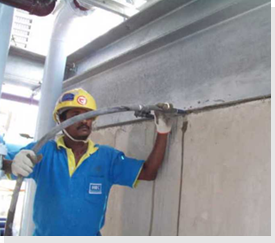
Concrete structures can develop cracks, voids and water seepage for various reasons. When these defects extend beyond the surface, pressure grouting can be used to introduce a suitable repair material into the affected area.
Different types of grout are available for concrete repair, and each has its own characteristics and applications. Selecting the right grouting method is important for achieving an effective and long-lasting repair.
Common Types of Pressure Grouting
Polyurethane Grouting
Polyurethane grouting, commonly known as PU grouting, is frequently used where water leakage or seepage is present.
The material can be injected into cracks, joints and voids. Certain polyurethane grout formulations react and expand when they come into contact with moisture, allowing the material to fill gaps and seal pathways where water is entering.
PU grouting can therefore be useful for waterproofing and concrete repair applications involving water ingress.
Cementitious Grouting
Cementitious grout is a cement-based material that can be used to fill larger voids and cavities.
It may be suitable for applications where filling and stabilising an affected area is required. The grout formulation can be selected according to factors such as flowability and strength requirements.
Cementitious grouting is commonly considered for concrete repair and construction applications where a cement-based solution is appropriate.
Epoxy Grouting
Epoxy-based grouting materials can be used for specific concrete repair applications where strong adhesion and durability are required.
Epoxy grout may be considered for certain cracks and concrete defects, depending on the condition of the structure and the purpose of the repair.
As with other grouting systems, an assessment of the affected area should be carried out before selecting epoxy as the repair material.
How Do You Choose the Right Grouting Method?
There is no single grouting solution suitable for every project. Several factors need to be considered, including:
- Type and size of the crack or void
- Whether water is present
- Condition of the surrounding concrete
- Location of the defect
- Required strength and performance
- Purpose of the repair
For example, a water leakage problem may require a different approach from a large internal void that needs to be filled.
This is why pressure grouting should be planned based on actual site conditions rather than simply selecting a grout material based on the visible defect.
Pressure Grouting for Concrete Repair
Pressure grouting can form part of a wider concrete repair strategy. Depending on the condition of the structure, it may be used alongside other methods such as concrete repair, chipping, waterproofing or shotcreting.
The objective is to address the underlying problem rather than simply cover the visible defect.
For more complex structures, professional assessment is particularly important because water pathways, internal voids and concrete deterioration may not always be visible from the surface.
Professional Grouting Services in Singapore
HRC Harvest Resources Pte Ltd provides specialised grouting and concrete repair services in Singapore. Its services include Chipping Concrete Pressure Grouting, Polyurethane Grouting, Epoxy Grouting and Shotcreting.
With experience in specialised concrete repair works, the company provides solutions for different types of building and construction applications.
Whether the issue involves water seepage, concrete cracks, voids or other defects, the appropriate repair method should be determined based on the actual condition of the structure.
Conclusion
Choosing the right type of grout is an important part of successful pressure grouting. Polyurethane, cementitious and epoxy grouting each have different properties and applications, making professional assessment essential before repair works begin.
A suitable grouting method can help address concrete defects more effectively while reducing the need for unnecessary removal of surrounding concrete.