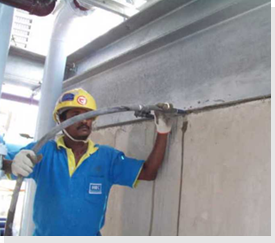
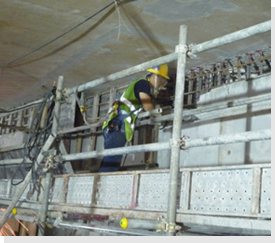
Pressure grouting is a specialised technique used in concrete repair and construction to fill cracks, voids and cavities that may not be accessible through conventional repair methods. It involves injecting grout into affected areas under controlled pressure to seal, fill or strengthen the damaged section.
For buildings and infrastructure in Singapore, pressure grouting can be an effective solution for addressing concrete defects, water seepage and other problems that develop over time.
What Is Pressure Grouting?
Pressure grouting involves injecting a suitable grout material into cracks, joints, voids or cavities within a concrete structure. The grout is pumped through specially prepared injection points and travels into the affected area.
Depending on the requirements of the project, different types of grout may be used. These can include cementitious grout, polyurethane grout and epoxy-based materials.
Unlike a surface repair, pressure grouting allows the repair material to reach areas below or behind the visible defect. This makes it useful when the problem extends deeper into the concrete structure.
What Is Pressure Grouting Used For?
Pressure grouting can be used for various concrete repair and rehabilitation applications, including:
- Filling cracks, voids and cavities
- Sealing water leakage and seepage
- Repairing deteriorated concrete
- Filling gaps in concrete structures
- Addressing concealed defects
- Supporting concrete repair and rehabilitation works
The most suitable grouting method depends on the cause and condition of the defect. A proper assessment should be carried out before deciding on the appropriate grout material and injection technique.
How Does Pressure Grouting Work?
The pressure grouting process generally involves several stages.
- Inspection
The affected area is first inspected to determine the location and extent of the defect. Cracks, water seepage, voids and other signs of deterioration are assessed.
- Surface Preparation
Loose or damaged concrete may be removed and the affected area cleaned. Preparation requirements depend on the condition of the structure and the type of repair required.
- Injection Point Installation
Injection ports are installed at selected locations along the affected area. These provide access for the grout to be injected into the concrete.
- Grout Injection
The selected grout is injected through the ports under controlled pressure. The pressure and injection process are monitored to help ensure that the grout reaches the intended area.
- Completion
Once the affected area has been sufficiently filled or sealed, injection is stopped. The injection points can then be removed or treated, and the surface finished where required.
Benefits of Pressure Grouting
One of the main advantages of pressure grouting is its ability to treat areas that may be difficult to access using conventional repair methods.
Other benefits include:
- Targeted treatment of affected areas
- Effective filling of concealed voids
- Suitable for certain water leakage problems
- Reduced need for extensive concrete removal
- Different grout materials available for different applications
However, pressure grouting is not suitable for every concrete defect. The correct repair method depends on the condition of the structure and the underlying cause of the problem.
Pressure Grouting in Singapore
Singapore’s humid climate and frequent exposure to moisture can contribute to concrete deterioration and water seepage in certain structures. Proper concrete repair is therefore important when defects are identified.
HRC Harvest Resources Pte Ltd provides specialised concrete repair and grouting services in Singapore, including Chipping Concrete Pressure Grouting, Polyurethane Grouting, Epoxy Grouting and Shotcreting.
For concrete cracks, voids, leakage or other structural defects, a professional assessment can help determine whether pressure grouting is an appropriate solution.
Conclusion
Pressure grouting provides a targeted approach to repairing and sealing certain concrete defects. By injecting suitable grout into cracks, voids and cavities, the technique can address problems that may not be effectively treated through surface repair alone.
The success of pressure grouting depends on proper assessment, suitable material selection and controlled application. For this reason, experienced concrete repair professionals should be engaged to determine the most suitable solution for each project.